
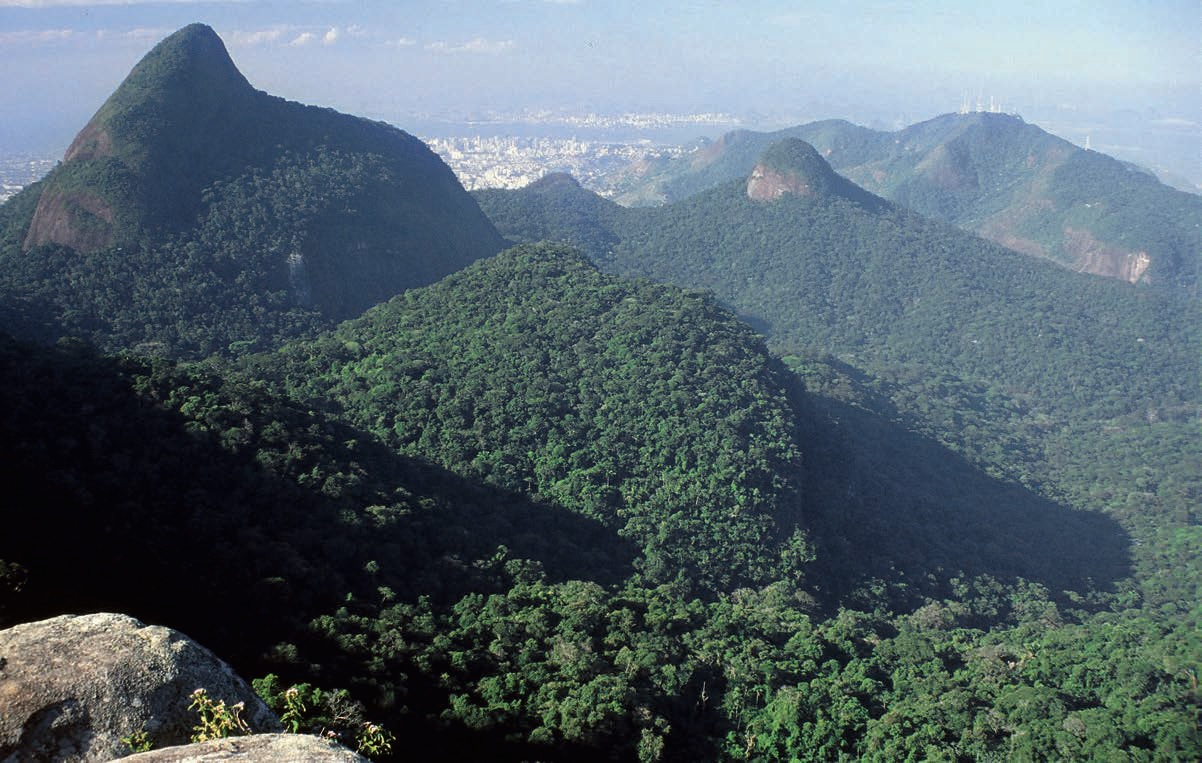
Parque Nacional da Tijuca, sprawling over 3,953 mountainous hectares in the heart of Rio de Janeiro, contains arguably the largest urban forest and the biggest replanted tropical forest in the world. Formally declared a National Park in 1961, the park is a unique and fascinating synthesis of culture and nature. Playgrounds, ornamental sculptures, fountains and picnic areas are backed by rock faces rising 500 feet above one of the world’s most endangered ecosystems; the forest itself is a human creation that, when set against the teeming metropolis encroaching its boundaries, could not appear more ‘natural’. Tijuca is noteworthy as an island of native forest in an increasingly dense and challenging urban setting. The well-being of the city itself has always been intimately associated with the fortunes of the environment that the park now struggles to preserve.
Tijuca rises from 80 to 1,021 metres in two ranges running parallel to the coast together referred to as the Tijuca Massif: a dramatic landscape of isolated peaks, deep valleys and vertical rock faces punctuated by numerous caves and waterfalls. The four forest sectors of the park are relics of a rainforest that once extended from the Uruguayan border to the northeastern tip of Brazil. Known as the Mata Atlântica; this ecoregion is older and more diverse than its Amazonian counterpart and has been nearly eliminated due to its location in the most densely populated part of the country.
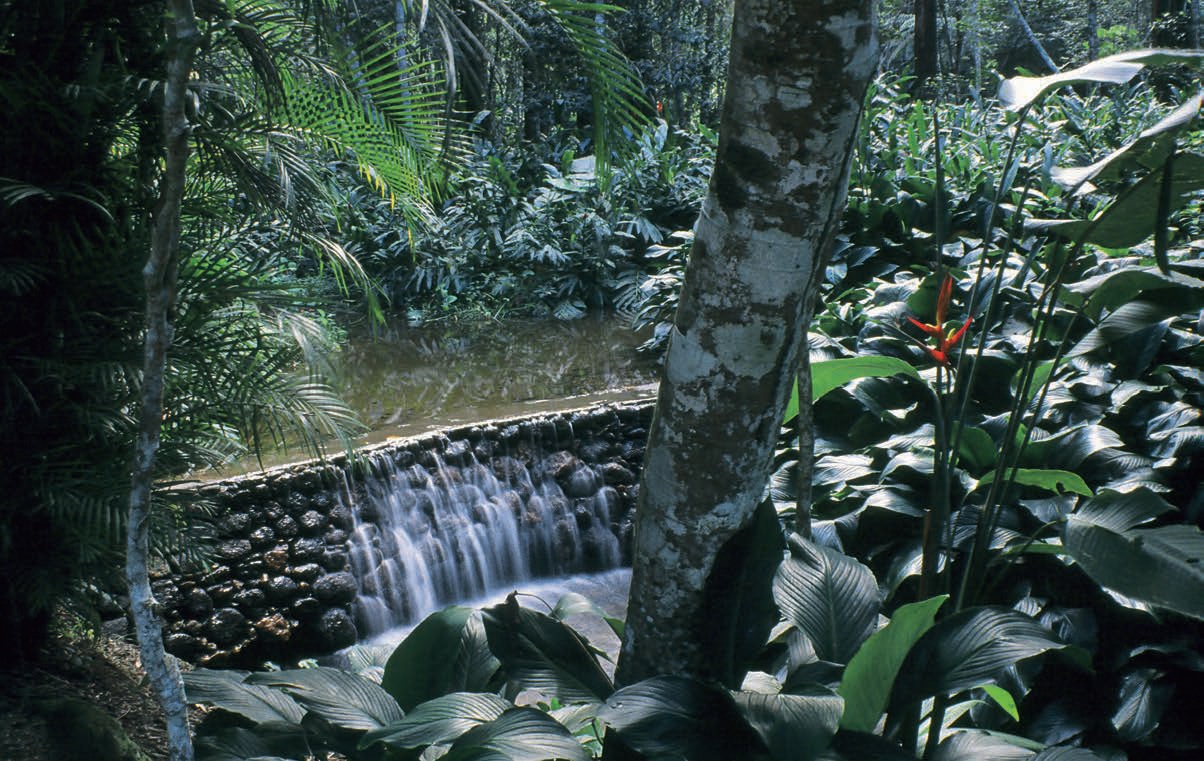
By 1840, most of Tijuca’s original rainforest, with trees reaching heights of 45 metres and diametres of more than 2 metres, had been cleared for coffee cultivation. Yet the Massif represented a valuable resource for the city not only because its cooler, wetter climate provided ideal growing conditions: its streams represented Rio’s only source of fresh water. With diminishing forest cover, the watercourses began to vanish during the dry season and flood during the wet. Between 1824 and 1844 a series of droughts made the situation critical enough to endanger the city’s growth. In 1861, a radical governmental decree called for the restoration of the watershed. The slopes were to be reforested with indigenous trees. It’s surprising and refreshing to discover that such a degree of farsightedness existed at that time, given that a monoculture of fast-growing exotics would have provided more immediate results and would have been more efficient to plant. By 1871, 60,000 trees had been planted, with a survival rate of about 80%. In 1877, an unofficial decision was made to transform the Tijuca Forest, the most level and formerly most devastated sector, into a public park; an escape from the heat and congestion below, incorporating plazas, roads, trails, bridges, fountains and ponds in the style of the Bois du Boulogne in Paris. Also included, for the first time, were numerous exotic and ornamental plants in the vicinity of these features.
Since then, the forest itself has generally been left in a state of natural regeneration and is today the dominant experience of the park, with designed spaces and structures covering less than 5% of its area.
The replanted zones form a nearly continuous canopy and have regained a diversity and luxuriance that amazes many visitors (and even scientists) familiar with the site’s tumultuous history. Despite compositional and structural differences from the original forest cover, the present-day forest contains over 1500 species of mostly native plants, about 400 of which are considered rare or endangered. In 1990, the park was recognised by the United Nations as part of Brazil’s Atlantic Forest Biosphere Preserve.
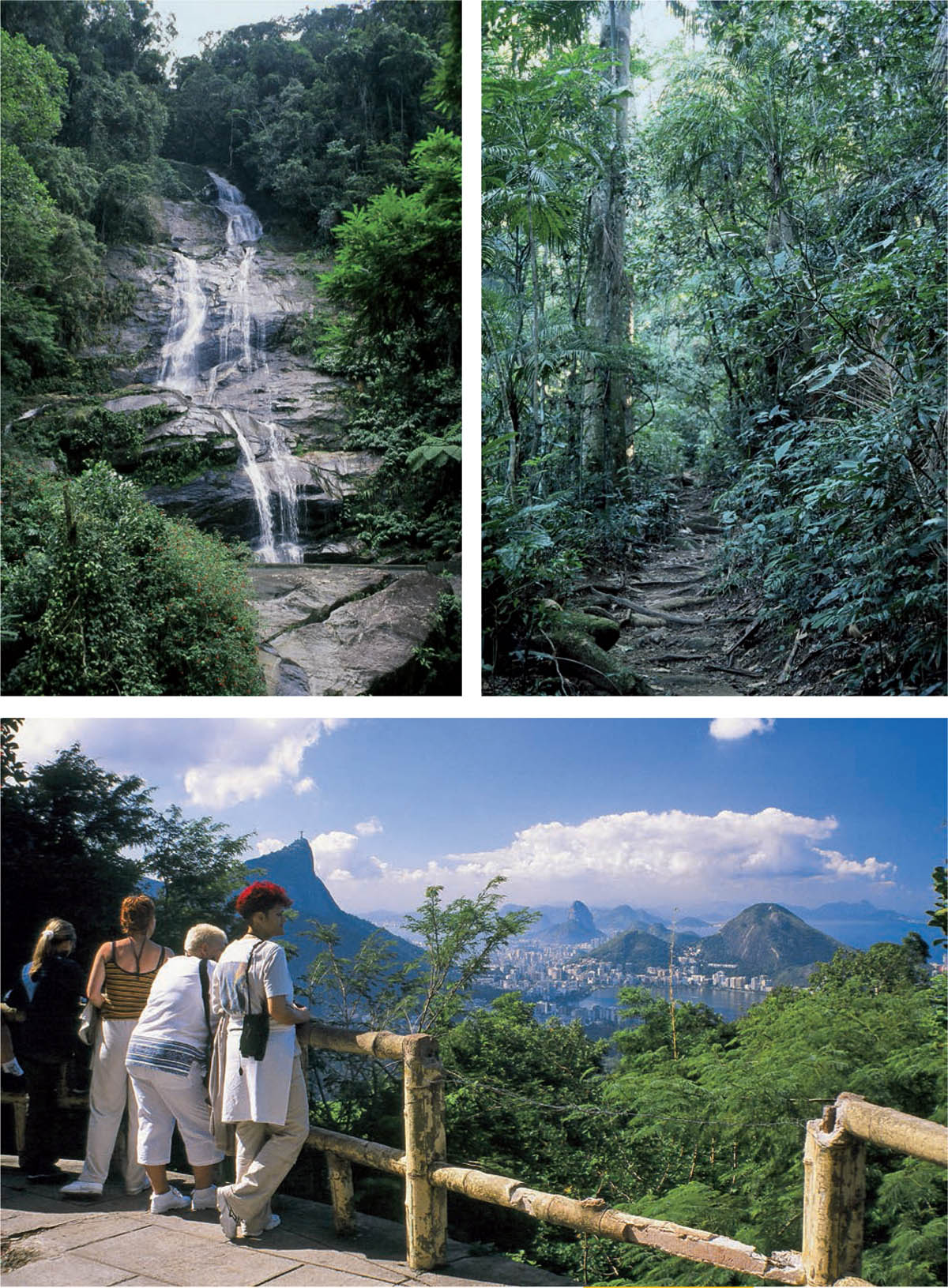
Top Right: Typical forest trail
Bottom: View of the city from Vista Chinesa
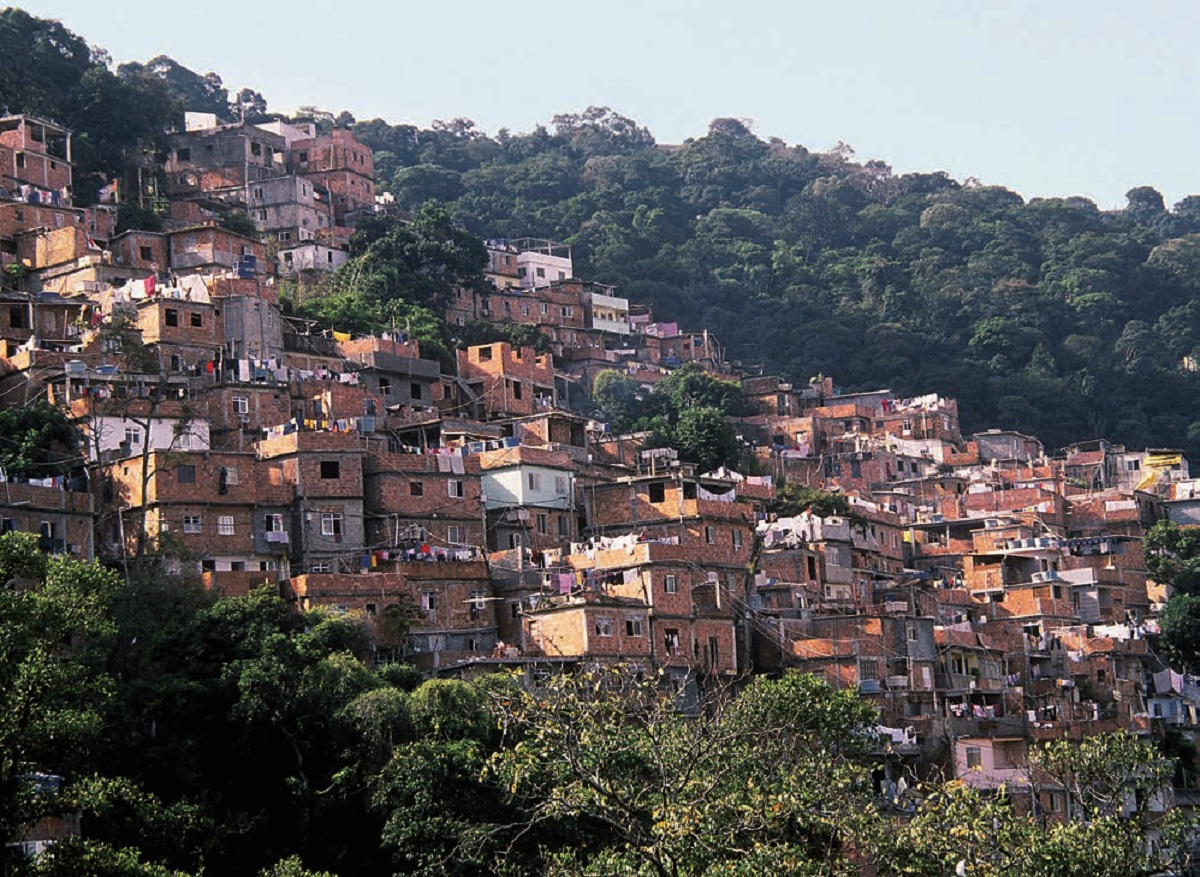
As the city has expanded and densified, civilisation is once again exerting serious pressures on the park as an ecological system, including pollution, human-caused forest fires, illegal plant extraction, invasive species and the overall strain of about 1.5 million annual visitors. Even more dramatic is the proliferation of shantytowns, or favelas, as rural poor and displaced urban residents have migrated to occupy Rio’s last affordable enclaves: erosion-prone ridges and slopes. Today, there are close to 50 favelas situated in the Tijuca Massif, home to one-third of the city’s total favelado population. The resulting deforestation threatens not only the forest itself: every rainy season, the Massif unleashes several football stadiums’ full of silt and boulders onto the city below, often with significant losses of life and property.
The relationship between Tijuca and Rio de Janeiro merits special attention because of more than its complex history. It is likely that the encroachment of the city has, in tandem with the re-establishment of the forest, conferred upon the park an even greater physical and psychological importance to the city’s residents. Today, passing within minutes from Rio’s dense neighbourhoods and slums into the Massif’s luxuriantly green (and noticeably cooler) landscape, it is clear that the original importance of the park as a retreat from the city has not diminished.
Even from miles away, Tijuca’s lush and evocative terrain seems to breathe life into this metropolis of over 12 million people, boasting more trees per person than any other city despite an overall scarcity of open spaces.
The Massif’s ruggedly picturesque profile is visible from nearly every point and often dominates the urban landscape, contributing to Rio’s identity as one of the world’s most beautiful cities. Such natural beauty even compensates in part for the city’s harsh social realities and raises quality of life to an extent that could attract forms of economic development, namely, clean and technology-oriented industries, with the capacity to improve the very social and environmental conditions that threaten a peaceful coexistence between park and city. Rio thus provides a particularly dramatic example of a city where growth and prosperity can be driven rather than impeded by protection of its ecological assets, protection that is potentially self-reinforcing in that its social and economic benefits may in turn facilitate stewardship of those very assets.
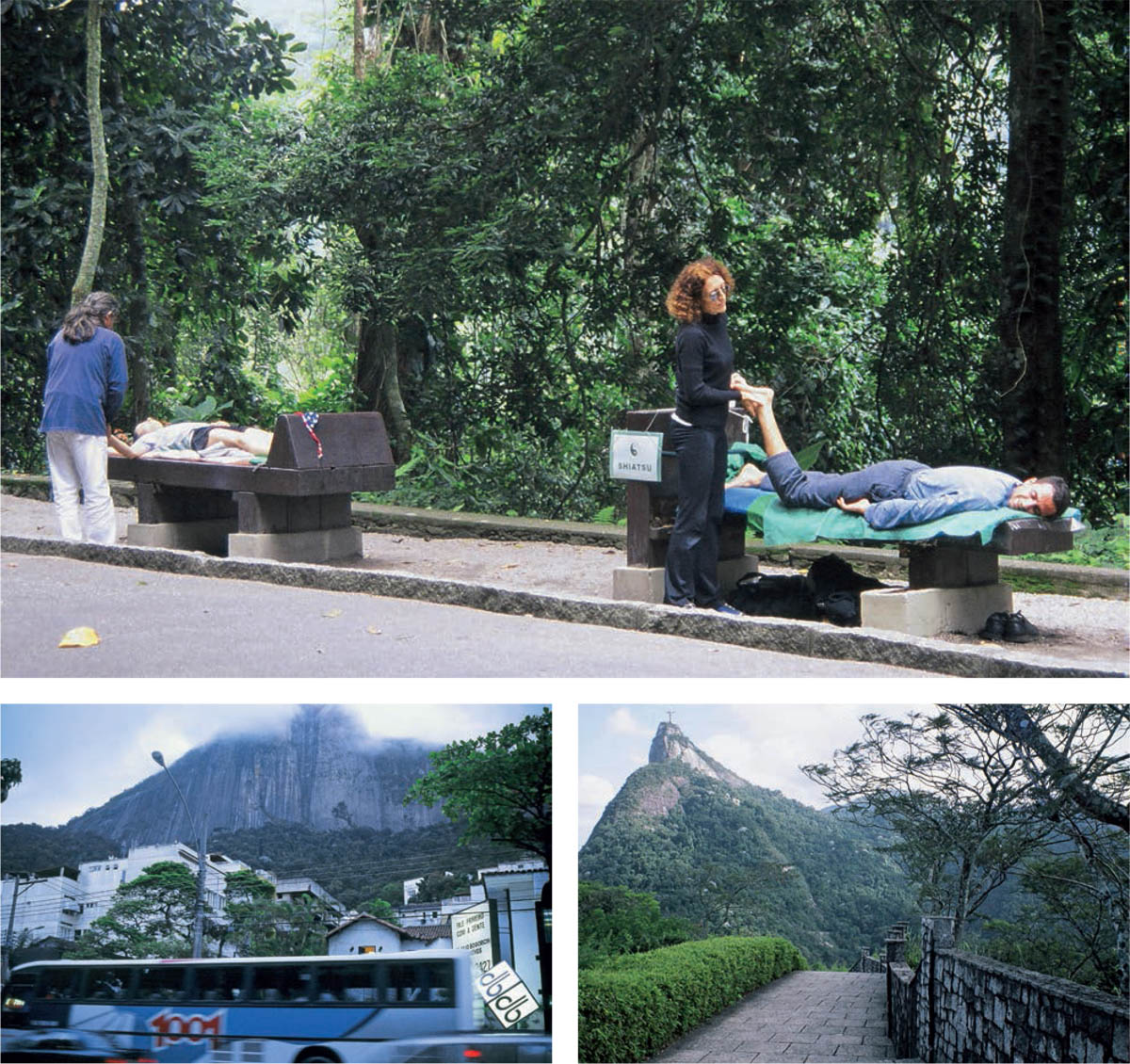
Bottom Left: Tijuca’s dramatic topography looming above city streets
Bottom Right: Ornamental plantings at Mirante Dona Marta, with the famous Christo Redentor (Christ the Redeemer) in the distance
Tijuca, today managed jointly by the Chico Mendes Institute for Biodiversity Conservation (part of the Ministry of Environment) and the municipal government, is perhaps unique among urban parks in that the maintenance of its public image as both a pleasant and ‘natural’ alternative to the city is mainly accomplished through the park’s embracing of the natural reconstitution and maturation of the forest, rather than more typical park maintenance practices.
Ornamental garden areas are comparatively tiny and there is no aesthetic ‘enhancement’ of the forest itself.
Despite the 2008 Management Plan’s comprehensive detailing of conservation, research and educational needs and goals, however, resources are not adequate to support significant efforts to combat ongoing threats to forest health and cover that are once more, within a century, expected to reach levels disastrous for the surrounding city.
It’s likely no other urban park in the world has had, over its history, a more diverse set of impacts and meanings than Parque Nacional da Tijuca. But despite past and present challenges, the contemporary visitor’s immediate impression of its landscape is not one of historical upheaval or of current threats to its integrity. Rather, the unexpectedly lush and mature forest, on weekends teeming with generally respectful visitors truly relishing their surroundings, provides evidence that the perception of ‘wilderness’ can still have a physical and psychological place in contemporary society, even (and especially) within an urban jungle of the more usual kind.

Comments (0)