
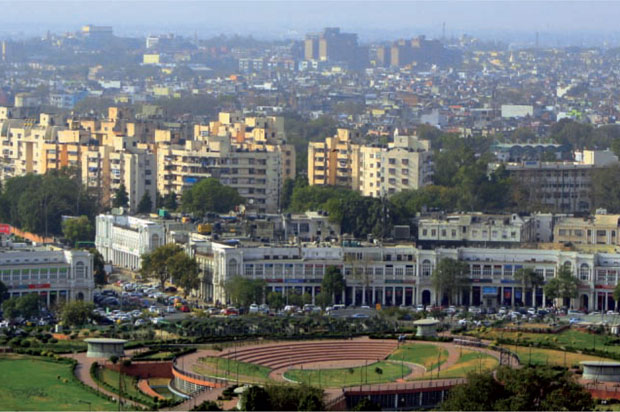
The mission statement of NIUA says: “Promoting integrated solutions for Urban India”. In the historic phase of urbanization that India is presently going through, which are the five most important issues where an integrated solution is most necessary?
The challenges that our cities face today can be traced back to unsustainable, largely informal and sprawling patterns of urban growth. These are systemic and interlinked issues that need integrated solutions. Densely populated Metropolitan regions and megacities profoundly impact the environment and our nation’s common wealth. A concerted effort is required to mitigate the risks that are inherent to densities of habitation. The economies of scale that are unique to large cities need to be leveraged and an integration of thinking in this regard is imperative. Further areas of action lie in ensuring universal access to services and removing regional imbalances to cover the infrastructural and opportunity gaps between urban and rural areas and boost the level and quality of services in small and medium towns.
Innovation in urban infrastructure is the need of the hour. Consider a breakthrough in solar power that expands our solar generation capacity: would we have the supporting infrastructure for managing this resource? Such questions require continual and multi-disciplinary research. Similarly, the issues of heritage conservation, preservation of natural resources and climate change are critical subjects for research. They are linked deeply with the issue of integrating informality into the formal frameworks of civil society. An iniquitous society is in itself a non- resilient society. Building resilient communities is about building communities in which all children are fed and receive education and where each individual can find self-actualization.
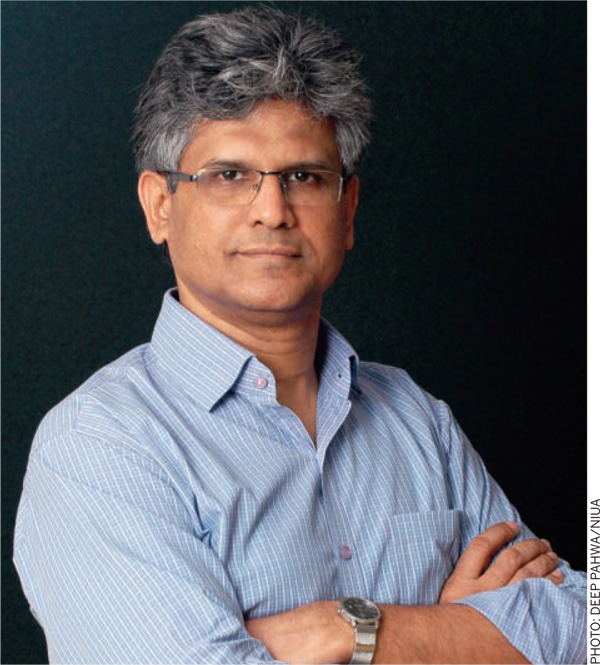
As Director of the nodal agency for the Smart Cities initiative of the Government of India, can you tell us which of the above-mentioned issues will be tackled in our Smart Cities?
Smart Cities are a step towards establishing models of balanced, sustainable urban growth, by harnessing innovative technologies to enable better social and economic futures for all citizens. Inclusive urban development remains a key component of a multi-pronged approach where we promote compact urban forms that reduce environmental impacts of sprawl and focus on the development of inclusive, prosperous and livable cities. Convergence of central and state level schemes is another focus area. Cities can combine multiple resources for funding their smart city proposals. Information and Communication Technology (ICT) and Geographic Information System (GIS) can enable seamless integration of different projects and schemes to reduce redundancies and wastage. The Special-Purpose Vehicle (SPV), as mandated by the mission, is the nodal agency for city planning and is expected to deliver the integrated planning effort with greater efficiency.
Citizen participation through e-governance is the backbone of the mission. Community-led development has been embraced as an approach for city planning and intervention. With the adoption of e-governance frameworks, cities can truly become large social organisms working towards a common goal. However, both the citizens and the government must learn to collaborate and to sustain the collaborative spirit of co-creation.
How can the Smart Cities programme be best used to create all-inclusive and affordable cities?
Rather than affordability, our focus must be on expanding options and alternatives. All people should be at liberty to choose what they consider most appropriate for their needs and their ability to pay. However, what we might find is that the state does not recognize informally developed shelters as a possible form of the ‘affordable’, and the intended beneficiaries of these housing schemes do not accept state manufactured ‘affordable’ housing. This disconnect will remain unless we allow all citizens to be simultaneously integrated into the urban economy and invested in the city’s development.
Citizen participation, place making and the creation of public spaces that celebrate the cultural capital of cities are key features of area-based interventions in the Smart City Mission. To include all citizens in urban development, we need to emphasize the creation of livable neighborhoods that offer a range of housing, livelihood and transportation options. Making big data available in real time can revolutionize urban governance, enabling more accurate and efficient targeting of government policies and programmes and a constant feedback loop.
Smart cities are opportunities for creating diverse and meaningful employment options and making space for the informal within formal markets. They ensure universal access to basic services including access to education and healthcare and mandate that a minimum of 10% of the city’s energy needs are met from solar power and 80% of all new construction is ‘green’ and energy efficient. These measures are pushing towards the creation of socially just, sustainable and healthier cities.
India has a rich cultural history and a distinguished cultural and urban heritage. How can we ensure that the Smart Cities initiative leads to cities that are truly Indian in spirit, reflecting continuation of our rich urban heritage?
Given the immense diversity embedded within the idea of India, preserving the authenticity of our cities is a difficult task, even more so in our rapidly urbanizing country. It will require an in-depth knowledge of things that make us truly Indian. However, urban identity is not the same as national identity.
Smart cities are expected to develop their unique brand of local civic identities, traditions and histories.
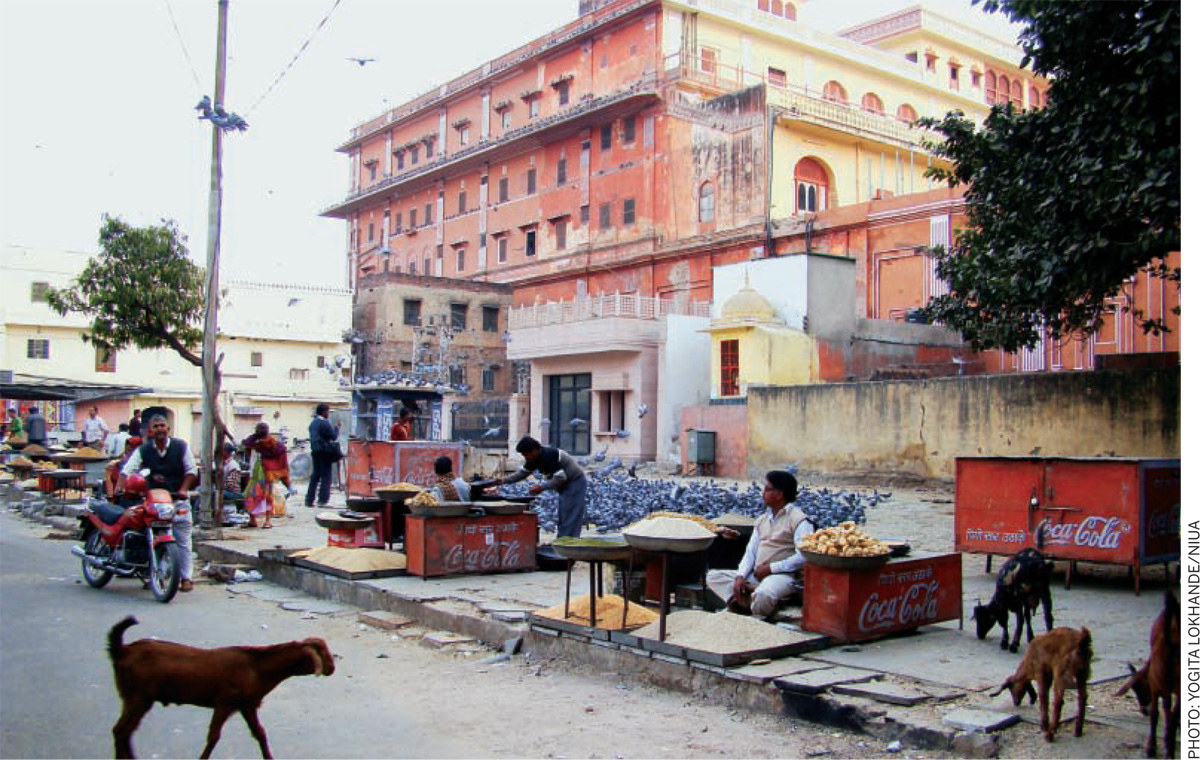
Smart Cities are not being developed in isolation from existing city fabrics. In their best form, they will smartly leverage the threads of continuity that can be woven into the fabric of an existing settlement. In the case of the Jaipur Smart City for instance, which has proposed to retrofit and redevelop parts of the walled city under its area-based intervention, existing built heritage and traditional arts and crafts are not just being integrated, but rather celebrated through the deployment of a mixed-use model of space management and the application of environment management and technologies, which can both restore and promote.
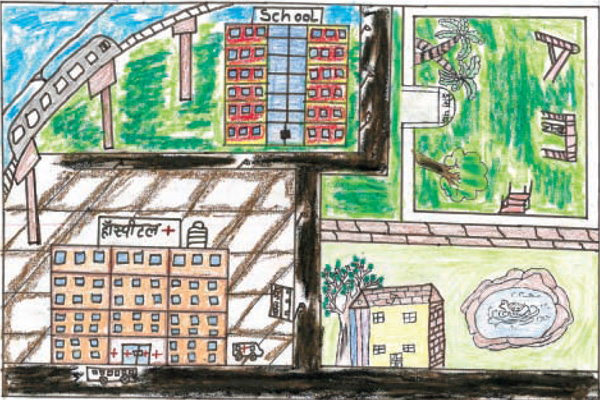
Many Indian cities have grown in the past few decades with minimal urban planning. How do you think the challenge of the ongoing rapid urbanization can be guided with the limited urban-planning expertise available in the country?
We clearly did not create the necessary capacities to plan our cities. Spatial and physical planning were developed both in their artistic and scientific dimensions in the West; in the colonial world, we found the proliferation of standard designs for cities and buildings. In the absence of spatial and physical sciences, cities grew from the discipline of civil engineering, which created huge overdesigned infrastructure and the concomitant wastages of material and energy. The gulf between the planner/architect and the engineer could not be closed and only now do we realize the importance of planning and place making.
One way for us to close these gaps, as Lewis Mumford put it so emphatically in The Culture of Cities (1938), is to ‘Socialize Creativity’. Let our cities be planned and designed with full citizen involvement. It is possible that city simulations, combined with computation and data mining, might be our redemption from the scarcity of capacity. I am not suggesting robots; just creative minds, imaginations and good intents activated by a mix of enabling technologies, crowd-sourced funding and open-source.

Comments (0)