

Architect and Urban Strategist
Cities invest heavily in understanding the risks they face. They are considerably less systematic about understanding the capabilities they already have. This article argues that urban resilience is not built through plans and infrastructure alone. It is also practised, adapted, and carried forward through the relationships, local knowledge, and community capacity embedded in how a city actually functions under stress. Drawing on Mumbai’s experience across repeated disruptions, from the floods of 2005 to the COVID-19 response in Dharavi, and on lessons from cities including Kobe, the article makes the case for a more distributed understanding of resilience: one that formal planning systems in Global South cities have yet to fully reckon with. At a time when climate disruptions are arriving in combinations that no single plan anticipates, the capability to sense, respond, and adapt across uncertain futures may matter as much as the quality of the plan itself.
When 944 millimetres of rain fell on Mumbai in a single day in July 2005, the Chitale Committee was constituted to investigate what had gone wrong. Its findings pointed to the familiar structural failures: encroachments on flood plains, deferred maintenance of drainage infrastructure, a city whose built environment had outpaced its capacity to manage water. The analysis was thorough. The investigation, however, was not commissioned to examine what had gone right.
Something did go right. When the formal city buckled, residents opened homes to strangers, local shops distributed food and water, and neighbourhood networks moved information about which routes were passable faster than any official channel could. The city held together not because its systems worked, but because its people did. We have since called this the ‘Spirit of Mumbai,’ usually to describe the city’s remarkable ability to get back on its feet after a shock.
But there is a more useful way of reading it. What if the Spirit of Mumbai is not simply a cultural reflex, but a form of distributed capability that exists in the city long before any formal resilience strategy is written? And if that is true, what should it mean for how cities plan?
The resilience that plans do not capture
Urban planning has grown considerably more sophisticated in its treatment of climate risk. Cities can now model flood-prone areas, map heat islands, calculate infrastructure vulnerability, and develop climate action plans of genuine technical ambition. Mumbai has done much of this work, most visibly through its Climate Action Plan of 2022, a serious policy document that sets a net-zero target for 2050 and addresses six priority sectors from energy to urban flooding.
These are real achievements. A plan is better than no plan, and the political will required to produce one in Mumbai’s complex governance environment should not be taken lightly.
But cities do not function through infrastructure and plans alone. They function through relationships, through locally held knowledge, through the capacity of communities to recognise a problem and act before any official system does. This category of capability, less legible, harder to finance, and almost impossible to map, tends to be the category that formal planning systems struggle most to see. It is also, as the evidence increasingly suggests, the category that determines whether a city can hold together when a crisis does not arrive in the form that models anticipated.
The question worth asking of any city is not only whether it has the infrastructure to withstand a known risk, but whether it has the capability to respond when the risk arrives differently.
What the evidence shows
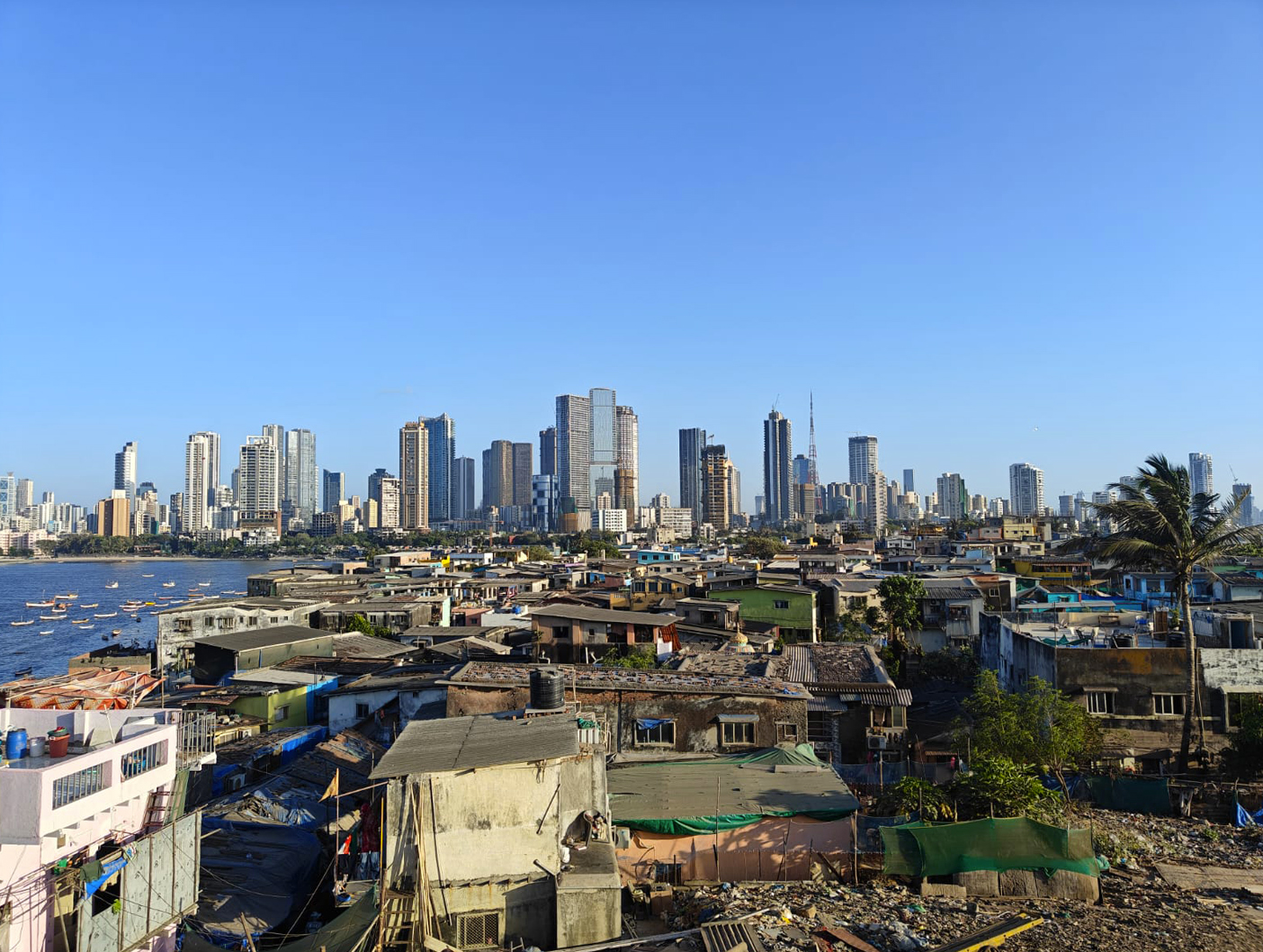
A 2025 study by Jaideep Visave and Daniel Aldrich of Sahakar Nagar, a coastal neighbourhood in Mumbai with recurring flood exposure, found a significant correlation between trust among neighbours and the adoption of resilience behaviours: proactive coping, seeking social support, and collective problem-solving. The finding is not counterintuitive to anyone who has lived through a Mumbai monsoon. What it does is provide empirical grounding for something practitioners have long observed: the relationships through which people organise themselves are not peripheral to urban resilience. Under conditions of stress, they are often its most reliable infrastructure.
This is not an argument for romanticising informal systems or for treating community capacity as a substitute for adequate public investment. A neighbourhood that repeatedly demonstrates the ability to survive flooding may also be living with exposure that should have been addressed through better infrastructure and governance. The capacity to cope is not the same as the absence of vulnerability, and it should never become institutional permission to leave underlying risks unaddressed.
The more productive question is how these two forms of capacity, formal and informal, can work together rather than in parallel ignorance of each other.
The COVID-19 response in Dharavi illustrates why this distinction matters. The settlement, approximately one million people in 2.1 square kilometres, recorded a containment trajectory in mid-2020 that drew international attention and acknowledgment from the World Health Organization. It is sometimes described as a government achievement and sometimes as a community one. It was both, and that is precisely the point. Municipal health teams operated at granular ward level alongside community organisations, local leaders, and frontline workers who understood the social and physical fabric of the settlement in ways that no centralised system could replicate. The response worked in part because municipal teams could operate through networks that already existed. The formal system provided structure. The community provided reach. Neither was sufficient without the other.
The lesson is specific: government can sometimes achieve considerably more when it works through the social infrastructure already present in a city, rather than designing around it.
What if the Spirit of Mumbai is not simply a cultural reflex, but a form of distributed capability that exists in the city long before any formal resilience strategy is written?
What other cities have learned
Cities that have built durable resilience have generally arrived at a version of this insight through their own experience, often a painful one.
After the Great Hanshin earthquake of January 1995 in Japan, which killed over six thousand people in under twenty seconds, the formal emergency response in Kobe was slow to mobilise at scale. In the gap, the city’s neighbourhood associations, deeply embedded civic structures with no formal emergency mandate, organised search and rescue, distributed food, and coordinated temporary shelter. They knew things that no central database could easily capture: who was elderly and living alone, which households needed help, and how the social relationships of each neighbourhood could be mobilised. The state arrived with resources the associations could not provide. But the associations had already done something the state could not: act immediately, with granular knowledge of the specific place.
Kobe subsequently invested significantly in institutionalising this relationship, embedding neighbourhood preparedness into its formal disaster management architecture. The point is not that this model can be transplanted elsewhere. Japan’s civic culture, its tradition of neighbourhood governance, and the specific social structure of Kobe are not replicable conditions. The point is structural: resilience deepens when formal institutions develop genuine working relationships with the distributed capabilities that already exist in a city, rather than treating those capabilities as supplementary or incidental.
Mumbai has those capabilities, the question is whether its institutions have yet learned to work with them.
Planning for futures we cannot fully predict
There is a further dimension to this that goes beyond any single city’s experience.
The BCG Henderson Institute’s Beyond Tomorrow report, which examined four plausible scenarios for 2050 across a range of economic, technological, and geopolitical variables, concluded that organisations facing deep uncertainty need to invest in capabilities that remain useful across multiple possible futures, rather than optimising for a single forecast. The emphasis falls on sensing change early, maintaining flexibility, and building the capacity to adapt when assumptions prove wrong.
Cities face a version of this challenge that is, if anything, more acute. A plan is a response to an anticipated future. A capability is useful across many of them.
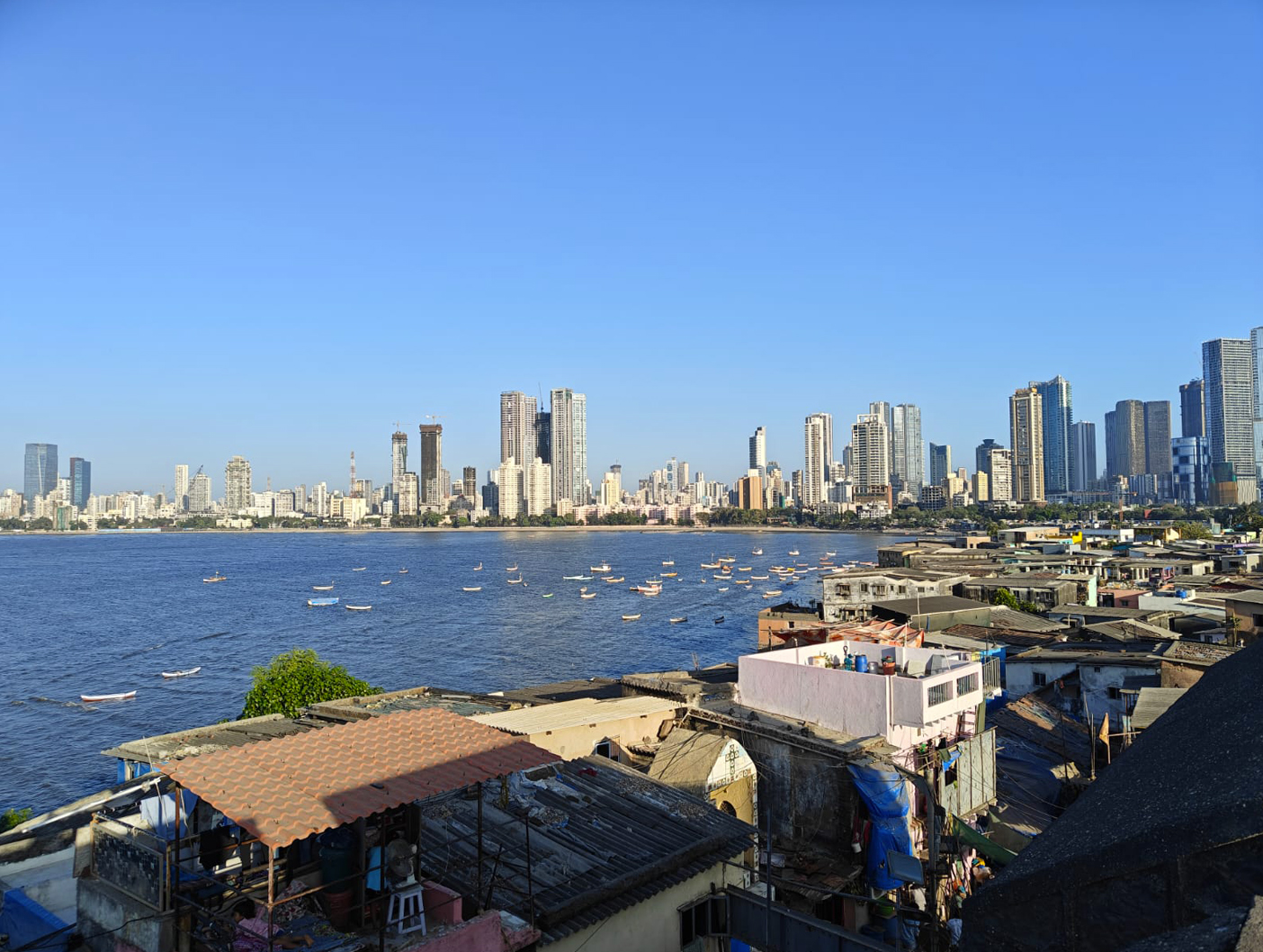
Climate disruptions in Mumbai do not always arrive in the form that models anticipate. They can arrive in combination: extreme rainfall alongside a high tide, a power failure alongside a heatwave, or an economic shock compounding a public health emergency. What remains useful across these scenarios is the ability to detect a problem early, communicate through trusted channels, mobilise resources at neighbourhood level, and adapt when the situation diverges from the plan.
Some of those capabilities come from infrastructure and technology. Others come from institutions. Some already exist, distributed and largely unrecognised, within communities across the city.
What institutions need to learn
The opportunity here is specific and it is not about romanticising community capacity or relieving the state of its responsibilities. It is about building more deliberate connections between the distributed capabilities that already exist and the institutions that have the authority and resources to act at scale.
That requires planning institutions to ask different questions alongside the ones they already ask. Not only: have we mapped the risk? But also: do we know which community networks would be our most effective partners in a response? Not only: have we set the targets? But also: do our delivery mechanisms reach the people who most need them, through channels those people actually trust? And, perhaps most pointedly: have we learned anything from how the city responded the last time the infrastructure was not enough?
That last question is the one most often left unasked. The Chitale Committee produced a thorough account of what failed structurally in 2005. The knowledge held by the residents who navigated those days, who knew which lane flooded first, which neighbour would need help, which informal networks moved faster than official ones, was never systematically gathered. It remains in the city, distributed across the memory of everyone who was there, available to the next crisis but invisible to the next plan.
The ambition should not be to formalise every informal network. Much of its value lies precisely in its flexibility and its freedom from bureaucratic constraint. The ambition is more modest and more difficult: to build the institutional relationships that allow formal and informal capacity to find each other when it matters.
Mumbai has been doing some version of this for a long time, without ever calling it resilience. Its distributed capability, embedded in communities, carried through relationships and local knowledge and the accumulated experience of repeated disruption, is a genuine urban asset. The next step is for its planning institutions to pay closer attention to what the city has already been teaching them, and to recognise that asset as something worth understanding, supporting, and learning from, rather than something that simply happens when plans run out.
The Spirit of Mumbai is real. The work is to build institutions capable of working with it.
All photos : Kshitij Shah

Comments (0)