
Jaipur is a celebration of a monarch’s vision for a new capital city. Due to the congestion and the lack of water and sanitation in the former capital of Amber, Sawai Jai Singh located a site about 12 kilometers away for his new capital. It can be credited as India’s first planned city after the ancient Pataliputra, 2000 years prior. A forward-thinking sovereign, an astronomer and a mathematician himself, he consulted many scholars, referred to ancient city planning principles and contemporary European cities and in 1727 founded a city to make a political statement and establish his supremacy in the Rajputana region.
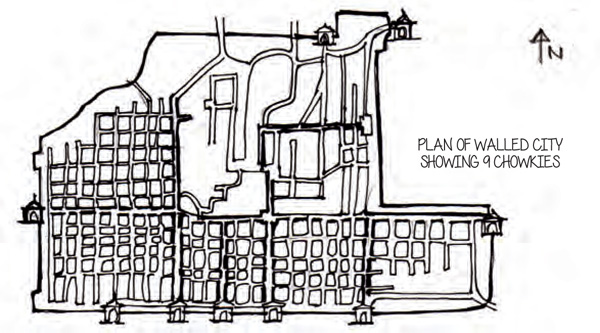
Following the Latin gridiron pattern, yet remaining faithful to the ancient Vastu Shilpa tradition, Bengali scholar Bidyadhar Bhattacharya planned a Shastric city following the North- South, East-West axis.
Based on the Pitha mandal, the city was divided into nine blocks to represent the nine planets, with broad streets between them.
Due to practicalities of the site, the Northwest block was placed on the Southeast due to a mountain. A wall with strategically located gates fortified the entire city. The nine blocks called Chowkris were around 800 meters by 800 meters, each having a designated function.
Two blocks were dedicated for royal use and remained inaccessible to the general public. The broad crossroads called Chaupar were spaces for festive gatherings and had shrines in them. The structures aligning the road were only one-story high but the inner ones could go higher. The main street structures were built by the state to ensure uniformity. Clusters of residences along with trading and social spaces together formed a cohesive mohalla. The privacy within the residential quarters was ensured through windows looking inward into open courtyards.
To ensure the economic growth and prosperity of the state, the king invited traders and craftsmen from as far as Afghanistan to settle in the new city. The royal patronage towards all kinds of arts and crafts continued and this is what makes Rajasthan undoubtedly the most vibrant and artistic state of all. Each craft and trade were allotted a certain street. This orderliness continued and today it’s a striking feature of the inner-city layout. Unfortunately, recent constructions have brought about an unsightly change in these spaces.
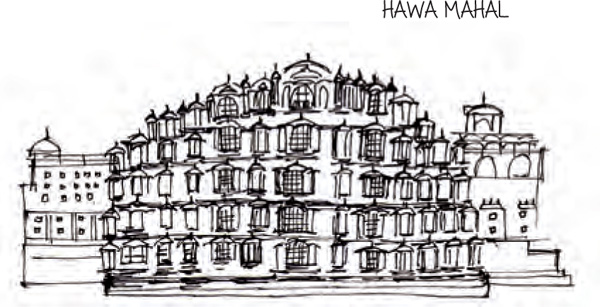
As a part of the establishment and growth of the city, impressive structures and monuments were also built. The architecture was largely Rajput with Mughal influences. Within the royal precinct, the grand palace stood with its impressive Darbar halls. The Hawa Mahal, which stands as an iconic representation of the city of Jaipur, was built adjoining the main street as a viewing gallery for the royal ladies.
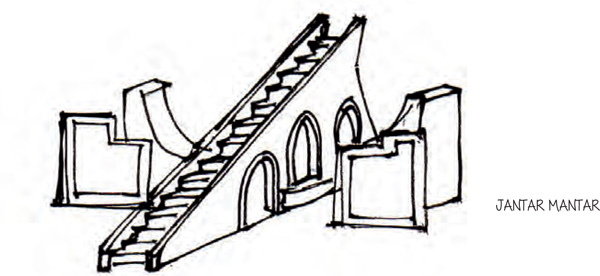
The most unique structure is the Jantar Mantar, a sundial that even today can tell the exact time.
After the British took over in the early 19th century, some brilliant examples of Indo-Saracenic architecture were added to the city’s skyline, especially outside the walled city.
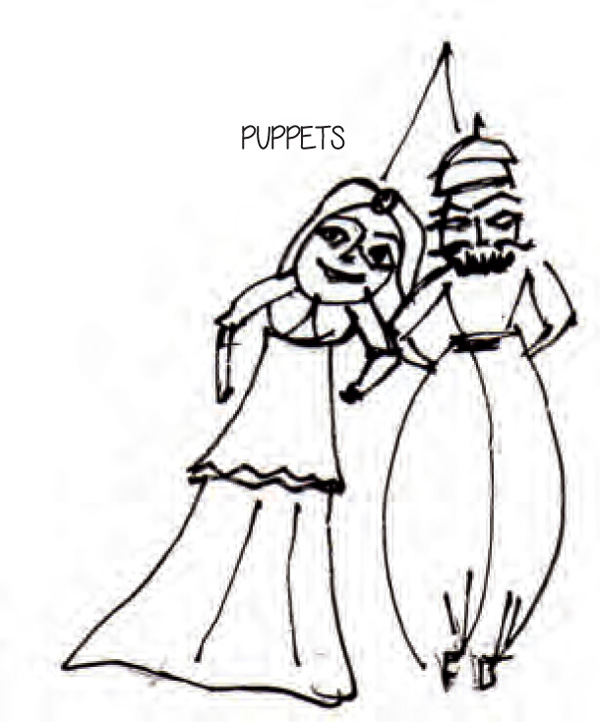
But what actually gives the city its charm is what lies between these monuments. The streets with their people, traditional clothing, the language, the food and the crafts are the living heritage of the city and one needs to engage with the community to enjoy it.
The Jaipur Virasat Foundation, a trust working towards the conservation of Rajasthan’s cultural heritage, having recognized this sentiment, is promoting the heritage walk as a tool to showcase and promote the living legacy.
Knowledgeable guides who share an excellent rapport with the community help you explore the city. While one explores the fort at Amber and the surrounding village, three are within the walled city.
So, after you’re ‘done’ with the touristic monuments, hit the streets and discover the soul of the city!
The ‘Temples and Haveli Walk’ explores the architecture of the place. Temples and shrines dot the entire city layout; the Mahadev Devji temple being the central focus of the Vastu Purush Mandal. Some even predate the city and most of them display exquisite art forms like paintings on the ceiling, walls and pillars: Arish, a technique with seven layers of lime plaster, the last wet layer rubbed with a coconut kernel; frescoes in the Kalyanji temple of Lord Vishnu; Kundan wall decorations in the Sanghi Juta Ram Jain temple. The Krishna temple has four layers of pradakshina or the circumambulatory path.
The haveli is a residential quarter with more than one courtyard and was ornamented to the extent of the occupant’s wealth. On this walk the Bagru ki haveli, of a family from Bagru, known for its block prints, demonstrates the use of block prints using organic dyes.
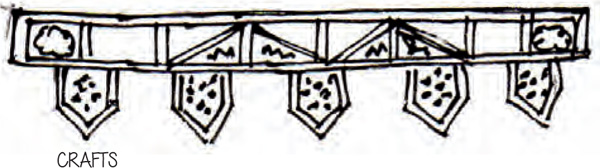
The ‘craft and cuisine’ walk takes you through the bylanes where the aromas of local delicacies pierce through the nostrils from a mile away. In the ‘ghee walon ka rasta’ you’ll find sweets made in ‘asli ghee’, candied sugars called batasa, namkeen bhandars, colorful dalmoths arranged in heaps to invite the attention of the visitors, kachodis in which the ‘hing ki kachodi’ is a delicacy, paan, lassi and more.
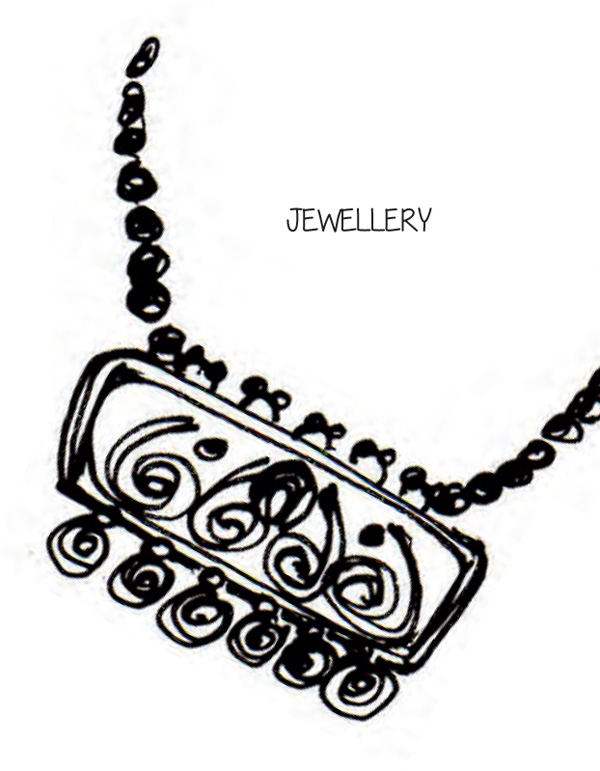
By the time you have covered it all there’s no place for another morsel. As you go through this you also feed on a substantial amount of exquisite art. Meenakari, gemstone cutting and polishing and the paper sellers lane with bright wedding invites offer a treat for the tongue and the eyes.
The ‘art and antiquity’ walk takes one to people who have clung to the past through collections spanning a few centuries. From padlocks to scrolls, from brass lamps to metal statues, from medieval games to wooden dolls it’s a journey into the past. One also gets to visit an Afghan family who was brought in by the royals to train in the use of bow and arrow and the ‘tye and dye’ art. Their visitor’s book actually dates back to the 18th century!
Jaipur is almost 300 years old. The population has grown manifold. Modes of transport have changed and construction techniques advanced. All these factors have put tremendous pressure on the city and are challenging the original patterns of land use. But the strength of the city remains its inner core. The traditional spaces have largely been able to sustain the functions within.
This labyrinth of art, craft, trade and various skills still maintain a strong linkage with the outer city and the highways beyond. More than the grandeur of a royal lifestyle, more than even the gilded walls and the priceless belongings, it is what goes on in the street that attracts you. Jaipur is the language, the song, the art, the craft, the food, the dress and the people themselves!
DRAWINGS: PRITHA SARDESSAI

Comments (0)